Details, Details
Posted on July 2, 2011
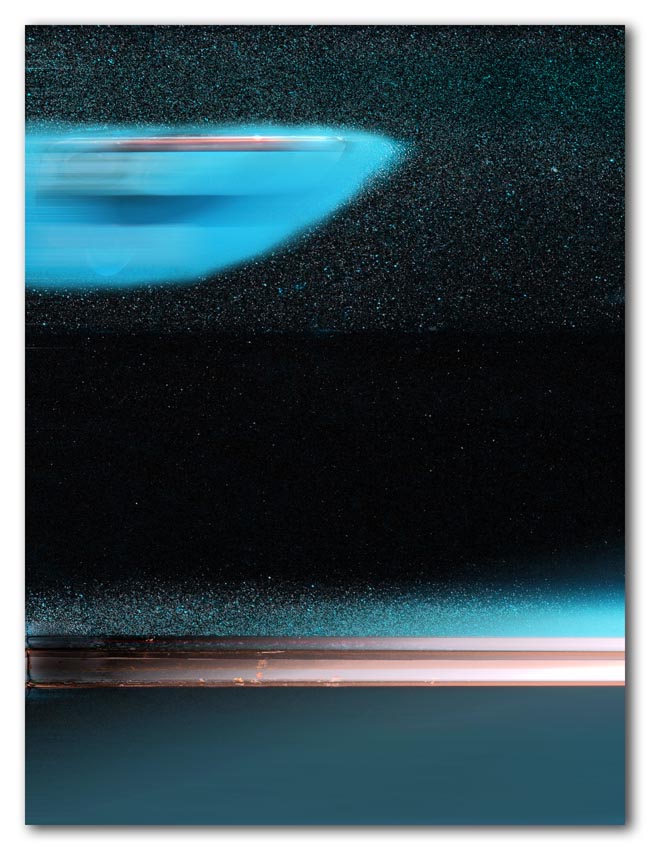
Midnight Blue ('63 Chevy) - 2011
Understanding the “big picture” is important. But that doesn’t mean one should ignore the details in life.
Sometimes, in fact, hints of the big picture can be glimpsed in the day’s details, like the mystery of a starry sky hidden in the door of an old Chevrolet, or the brief but brilliant song of a beach sunflower on a sunlit seaside dune. Stories exist that are more important than wealth and power.
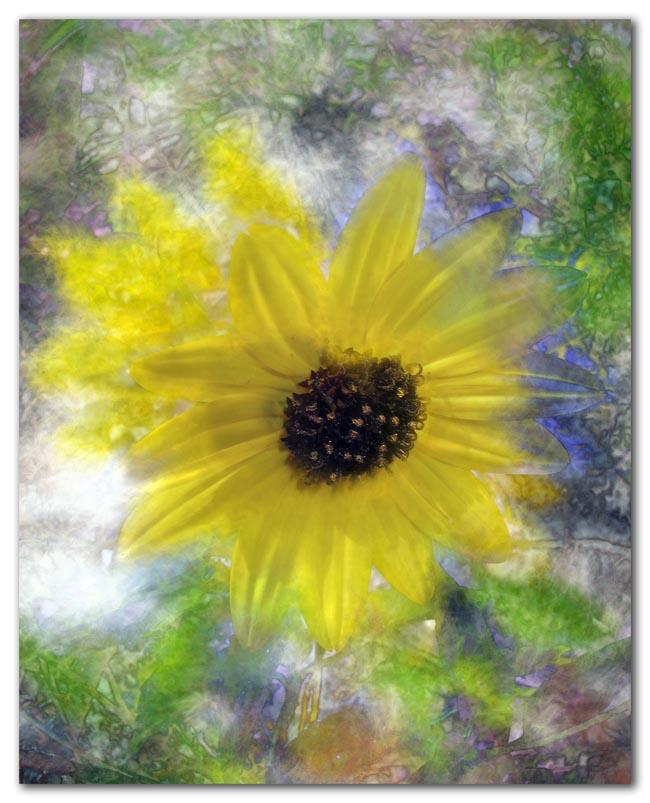
Beach Sunflower - 2011
Bromeliad Beauties
Posted on June 21, 2011
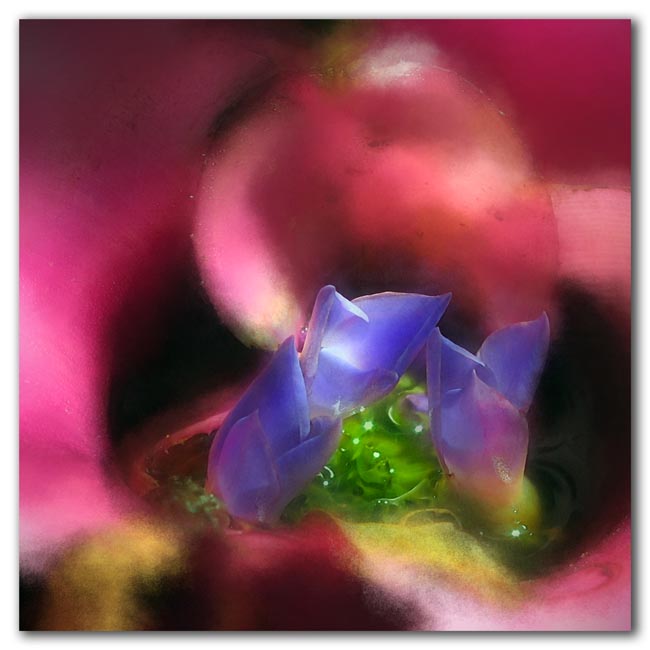
Pink with Inflorescence - 2011
These are two of over 3,000 species of bromeliads, a family that includes plants as diverse as spanish moss, the air plant well known by indoor gardeners, and the pineapple. Many, such as the spanish moss, are epiphytes that can subsist on nutrients in the air, rain and debris that fall around them, and do not need to be rooted to the ground. Others, like the pineapple are more terrestrial and do better rooted to the earth.
The variety of shapes and colors in these tropical plants is a dazzling reminder of the beauty around us — beauty that can bring balance into our lives if only we choose to look.
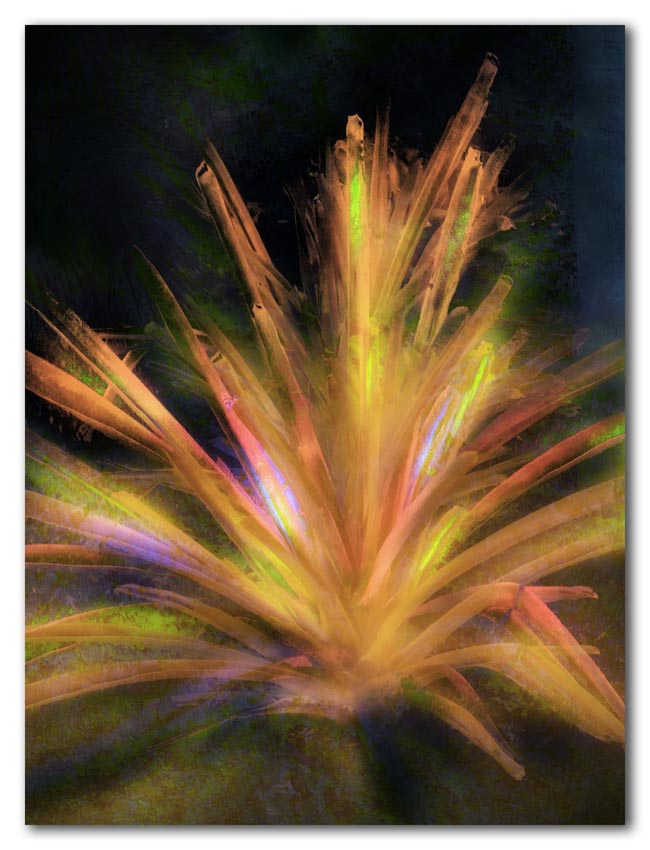
Golden - 2011
Bayside Shallows
Posted on June 7, 2011
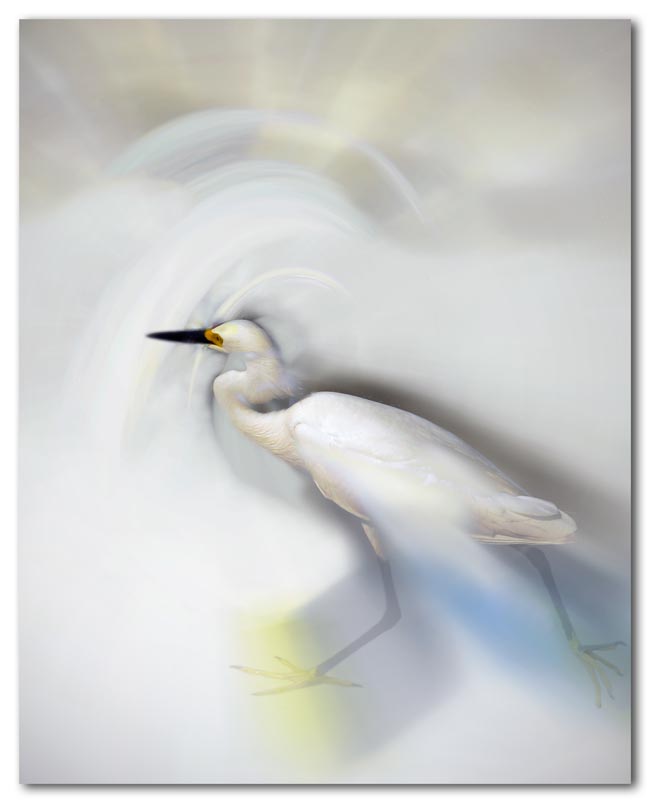
He Walks on Water -- 2011
By coming to Florida, we’ve traded the stunning Caribbean blue for a new emerald green. Each place has it’s own palette. The brilliant white sand, the sunlight shining through clear water, and the pure white snowy egret with his yellow feet stridng along the sugar-sand shore are part of the palette here.
What matters is not the colors or the subjects before us, but rather how we respond to them.
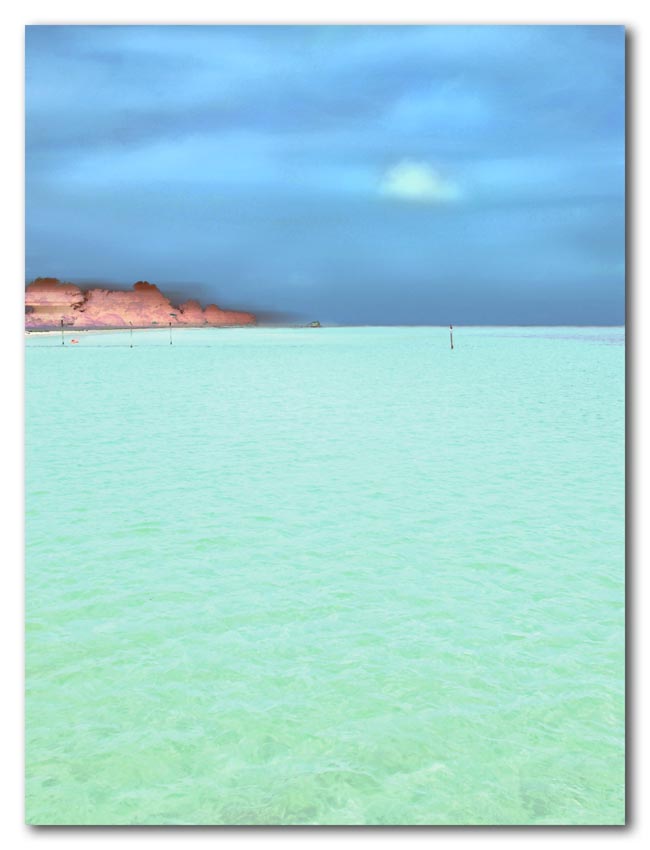
Bayside Shallows - 2011
More on “The Kiss”
Posted on May 29, 2011
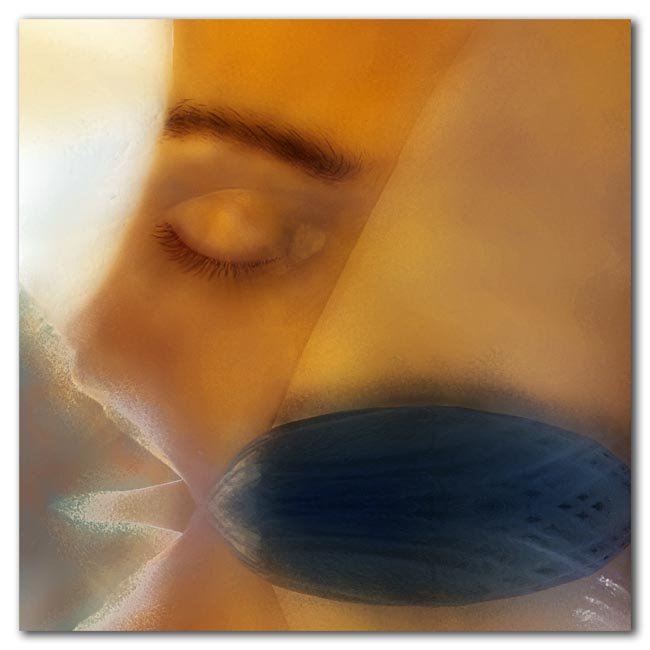
The Kiss Frozen in Time -- 2011
The images here are a more abstract follow-up to the previous post, which focused on the the somewhat controversial “Unconditional Surrender” sculpture by Seward Johnson.
The warm toned image above shows the sailor’s almost feminine closed eye at the moment of the kiss frozen in time. His eye is framed by other elements from the work — elements that suggest some of the strangeness one feels standing beneath this out-of-scale couple, looking up at their embrace.
The abstract below was inspired in part by the splash of red paint that had been used to deface the sculpture in what was probably a social statement, and by the emotional triggers being pulled.

Colors of the Kiss -- 2011
Unconditional Surrender
Posted on May 19, 2011
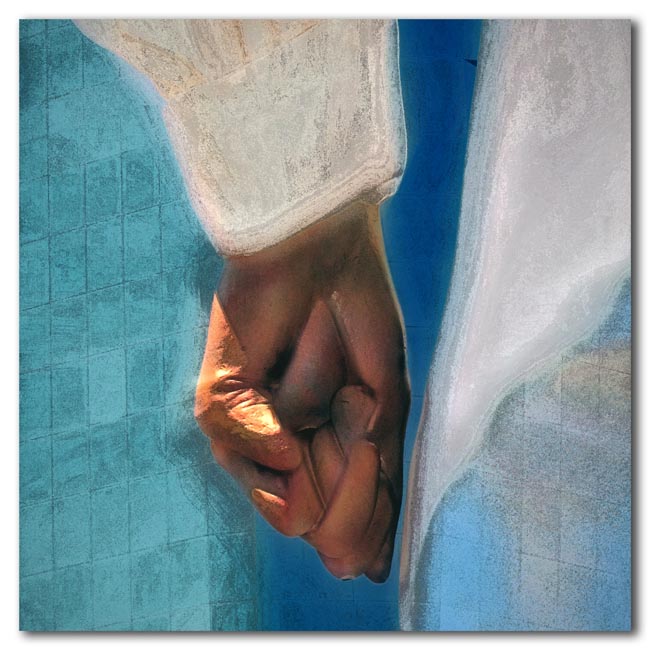
Crossing Her Fingers - 2011
Public art on a grand scale often garners attention, both good and bad. The 25 foot tall “Unconditional Surrender” by Seward Johnson along the bayfront in downtown Sarasota is no exception. There has been plenty of controversy since it first arrived here in 2005, with some calling it tacky, inappropriate and out of place along beautiful Sarasota Bay.
Also known informally as “The Kiss,” the sculpture appears modeled after the iconic Alfred Eisenstaedt photograph of a sailor returning home on V-J Day, kissing a nurse and nearly sweeping her off her feet. The artist claims a public domain photograph of the same couple was the actual reference for the sculpture.
In addition to criticisms of its artistic merit and debates about the proper attribution of sources, the sculpture has raised issues about the concept of unconditional surrender in war and in the woman’s surrender to the man. On the day these photographs were taken, the sculpture had been defaced with red paint running down the inside of the woman’s leg onto the ground at her feet.
Public art is often intended to decorate or beautify a public space, and many argue that this piece is garish and fails in that regard. However, if public art is also allowed to bring sensitive issues into a community’s awareness, perhaps there are ways this piece succeeds after all and is no more out of place than the structures, vehicles and ideas swirling around it.
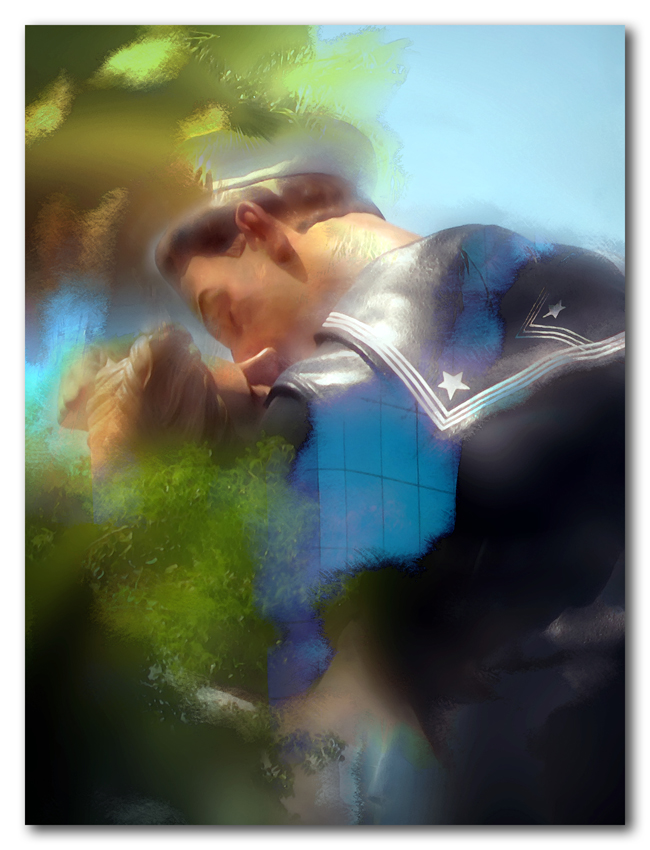
Unconditional Surrender in Sarasota - 2011
Enchantment
Posted on May 6, 2011
A Man and the Sea -- 2011
Concern with the modern world’s problems can lead to frustration not knowing how to help fix them. But in that frustration and the rush of daily life it is easy to lose sight of why it matters. The editors’ comment in the March-April edition of Orion Magazine says it well:
“What is much harder is to live life in a way that does not ignore, rush past, or postpone that part that has to do with enchantment. … [I]n our effort to live more lightly on the planet, enchantment may be the resource we need the most of.”
Perhaps one of the many roles of art is to help make enchantment more accessible. Rather than being an escape, enchantment with the natural world and with each other may be an antidote to the disregard and mean spiritedness that seem so common today.
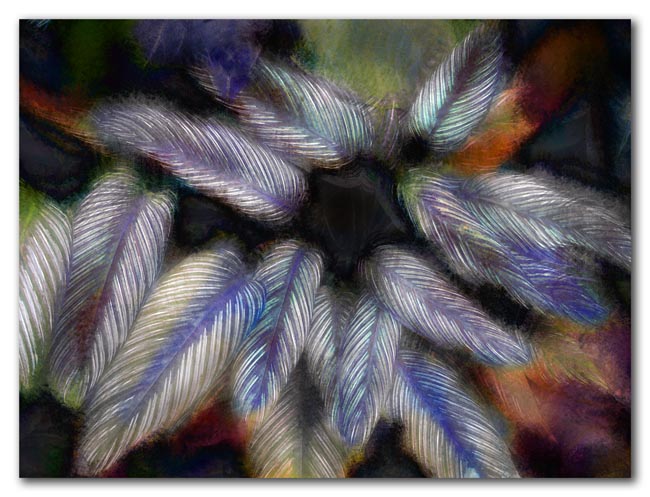
A Well of Enchantment -- 2011
Thinly Veiled
Posted on April 28, 2011

Thinly Veiled - 2011
Arriving in Florida after 12 years in the Caribbean, I find myself surrounded by a manicured suburban environment, rather than the inherently picturesque disorder of nature and barely restrained tropical decay more common in the Caribbean. Perhaps it is the difference that makes me notice, instead of take it for granted.
The gloss on the landscape along with the shiny baubles for sale in upscale shops distract from an awareness of the damage done to nature by the energy and other inputs required to maintain the suburban lifestyle. They also camouflage the increasing disparities in wealth and income, with poverty hidden away behind the bushes, in suburban homes, and in neighborhoods no one visits.
The manipulated landscape provides material for attractive imagery. The challenge is to find that beauty and evoke pleasure or a smile when the energy of life shines through — without losing touch with the unease at what may lurk beneath the smooth surface.
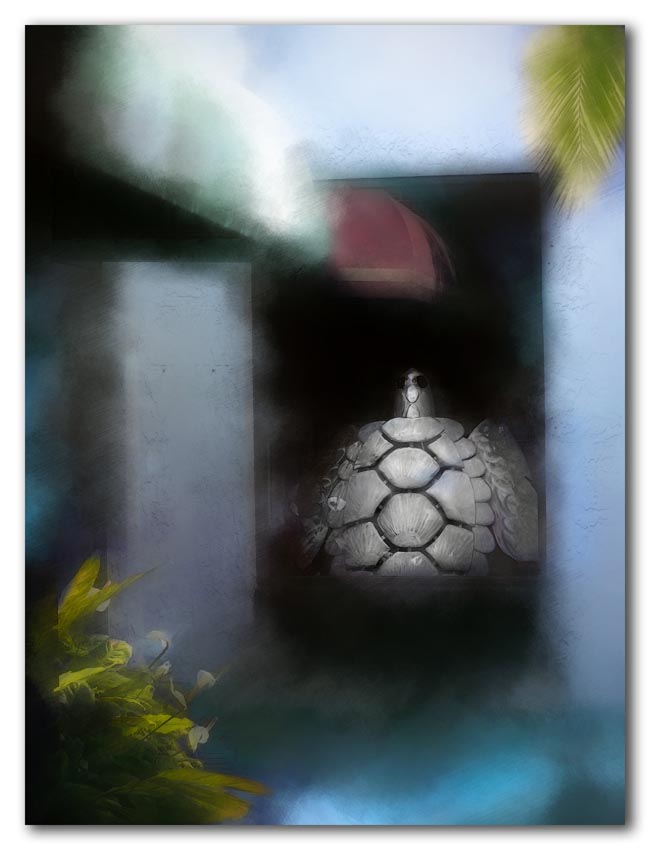
Turtle in Metal -- 2011
[Note: Someone asked why I had turned comments “off” on this post. That was unintentional, and I apologize. They are back “on” now. — May 5, 2011.]
A Walk in the Park
Posted on April 19, 2011
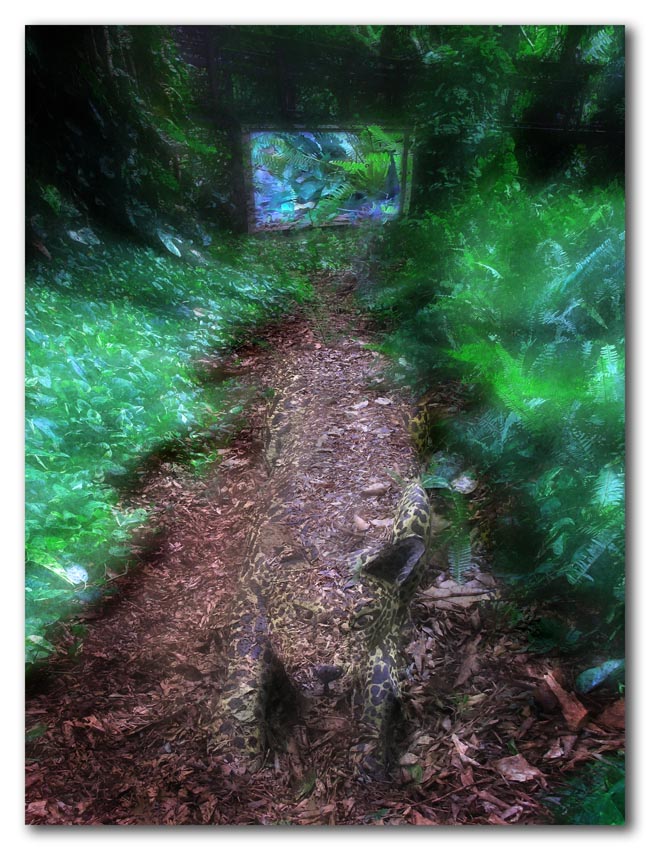
The Blue Screen
It all started as a simple walk in the park. But then a glowing blue screen appeared at the end of a path singing the siren song “come, look at me” as most blue screens do. I demurred, anxious about what might be lurking along the path and in the shadows under the ferns lining the way. Later, in the cool deep shade at the foot of the Banyan tree surrounded by its roots, the energy of that grand old tree swirled around me.
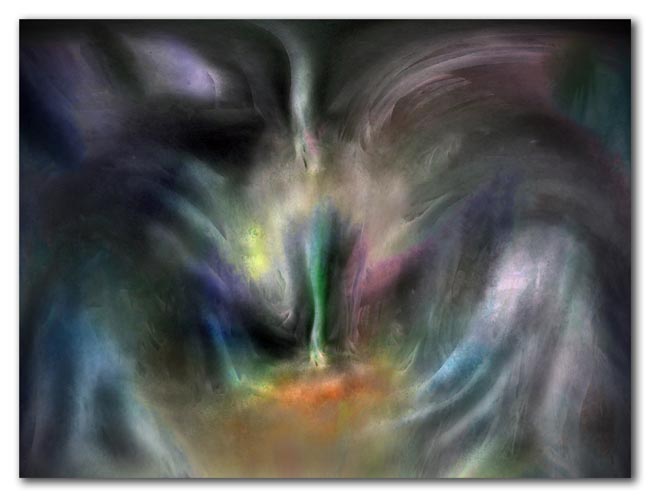
At the Foot of the Banyan
Bromeli-eyed Inflorescence
Posted on April 7, 2011
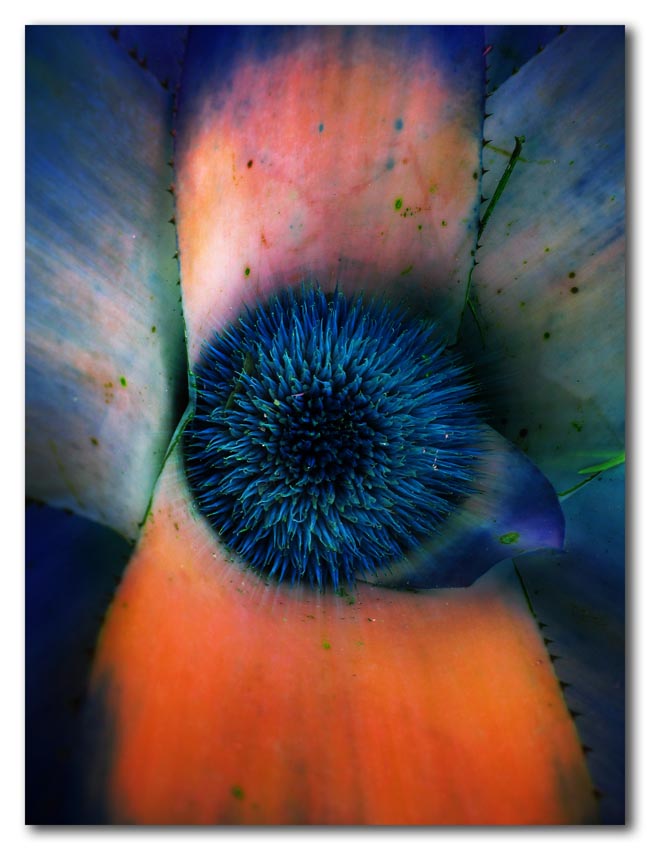
Bromeli-eye - 2011
People often anthropomorphize, sometimes seeing facial or other human features in plants or inanimate scenes, and often ascribing human feelings and emotions to pets, to wild animals, and even to important religious abstractions. This human tendency to anthropomorphize can provide comfort or cause unease, depending on the situation. The desire to find human attributes in the non-human may reflect our social nature and the importance of social context in our understanding of the world around us. And it is a good thing if it also encourages empathy for other living things and the environment.
I wonder if the increased speed of our civilization, increased electronic connectivity, and a corresponding reduction in time for contemplation and meaningful face to face contact with each other and with the natural world will affect the desire (or ability) to anthropomorphize — or to empathize.
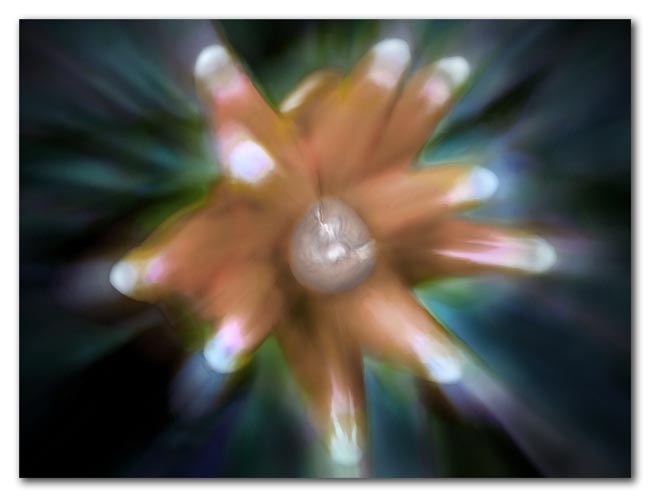
Inflorescence - 2011
The Power of an Orchid
Posted on March 29, 2011

Orchid Power - 2011
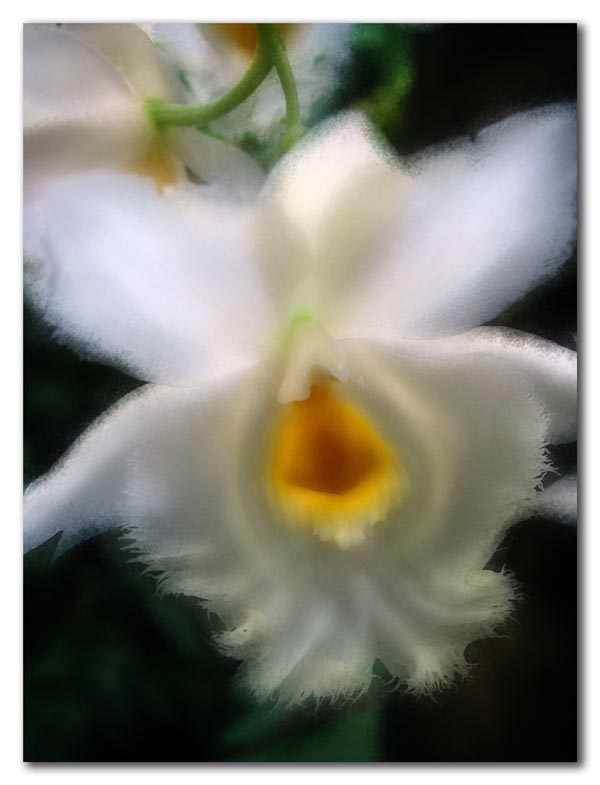
With the world in turmoil, new wars piled upon wars, disasters natural and man-made, and increasingly mean-spirited politics, take a moment to contemplate the innocent but sensuous beauty of the orchid.
Rather than an escape from reality, a few moments spent with the beauty of nature can be a source of balance and peace, and perhaps provide some of the wisdom needed to discern what is right.
(Orchids here are thanks to the Marie Selby Botanical Garden in Sarasota, Florida.)
An Innocent Orchid -- 2011
Those Coy Koi
Posted on March 19, 2011
A Coy Koi -- 2011
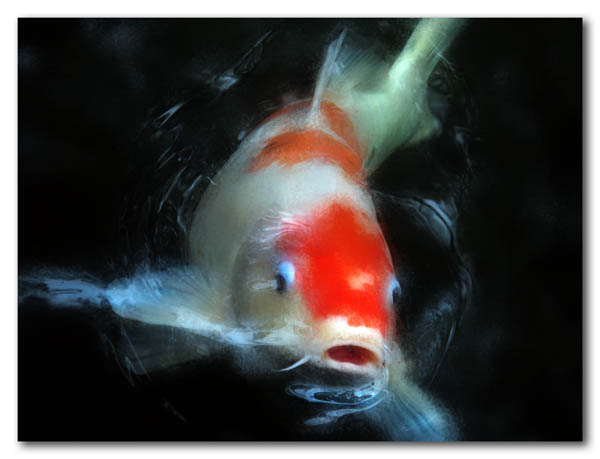
Koi, those large highly prized Japanese goldfish, are a frequent subject of painters. It’s probably the colors and graceful motion, and perhaps the traditional symbolism of the koi as perseverance in the face of adversity, strength and good luck. Step up to a koi pond, and the fish seem very coy, shyly approaching, then quickly swimming away.
It may be foolish to ascribe a human behavior such as coyness to a fish. After all, their wild heritage and instincts should make them naturally averse to any contact with man. On the other hand, their food often arrives along with the shadow of a person standing over their pond, rewarding them for approaching when this shadow of man appears. Their apparent coyness may just be the result of conflicting instincts and rewards.
Of course human coyness may also be a result of conflicting instincts, hungers and rewards. Perhaps the koi are not so different from us after all, and it is we who have learned to be koi.

Koi Ripples - 2011
Leaves, but not of Grass
Posted on March 6, 2011
Vegetal Dancers - 2011
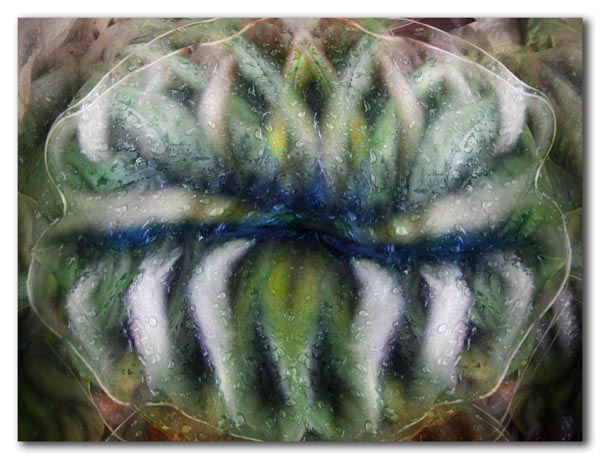
Despite the extended drought in Florida, the diversity and beauty of the plant life is stunning. The Marie Selby Botanical Gardens in Sarasota, where these original images were taken, is a wonderful place to see some of these plants.
A light rain had just ended, providing an extra sheen to the already shiny leaves. The top image is of a plant I cannot name. But as I worked with it, the texture and colors of its large leathery leaf began to look like the arms and legs of dancers hidden in a wet translucent mass. The second image is a much more straightforward presentation of one of the many varieties of large philodendron that thrive here, some of which have leaves that are dream-like in their own right.

Philodendream - 2011
St. Croix — Hotel Caravelle Artwork
Mocko Jumbies
 Donald Diddams