Donald Diddams
The Art of Digital Art
Along King Street in Frederiksted
Posted on May 25, 2009
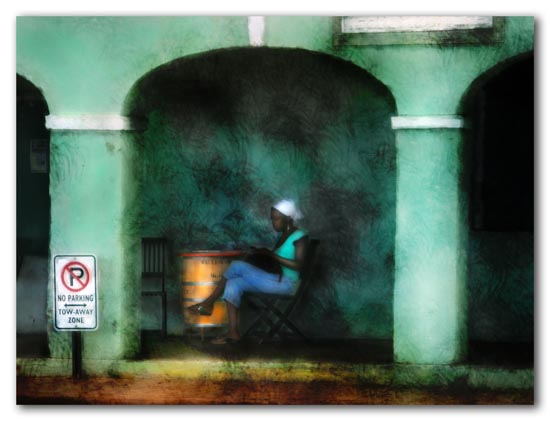
Along King Street - 2009
A young woman was relaxing in the shade of an arched arcade along the main thoroughfare of Frederiksted on the west end of St. Croix. The colors of her clothes and the building, her white headscarf, and the classic arch of the building’s arcade made for an iconic image of this old and economically depressed town.
Rum Factory Pot Still
Posted on May 20, 2009

Pot Still - 2009
This is an old pot still used in the making of rum back in the nineteeth century. With its strange gooseneck this is a somewhat unusual-looking relic of the sugar-based argibusiness of the Caribbean’s past. The image is dark and muddy to reflect my feelings about that past and some of its effects on people that continue to be passed down through the generations, even today.
For a gorgeous oil painting of an ancient sugar mill, and a description of things that took place there, check the May 20th post from Bonnie Luria, St. Croix painter and fellow blogger. Honestly, we didn’t conspire to address the same subject on the same day!
Point Udall View to Buck Island
Posted on May 8, 2009
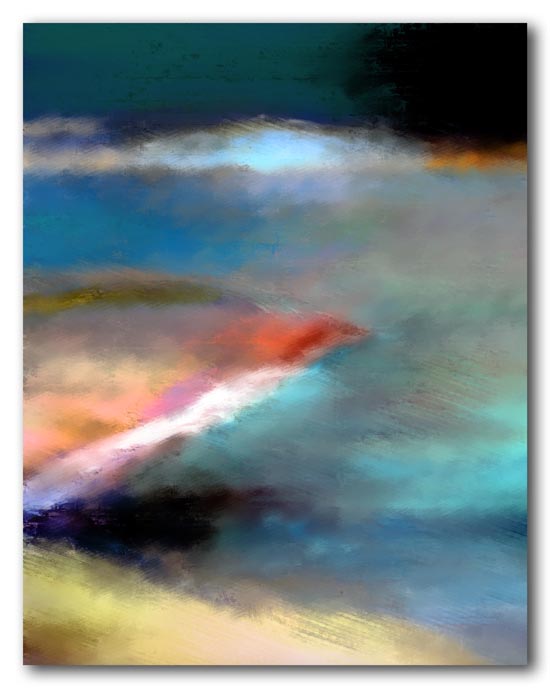
Buck Island View from Point Udall - 2009
Local tourism brochures advertise Point Udall on St. Croix as the easternmost point in the United States. The park and monument on Point Udall are on a high hill. This view looks back to the northwest along St. Croix’s north shore toward the iconic Buck Island in the distance. Although abstracted into a study in shape and color, the glowing attraction of the offshore landmark is still recognizable.
Colonial-era “Copper”
Posted on April 21, 2009
While enduring a stressful period in one of my other endeavors, it seemed a good time to work on what I hoped would be a peaceful landscape, a pretty picture. This was the result.

Copper - 2009
The object in the foreground is a colonial-era artifact known as a “copper”. These large iron containers were used to boil down the cane juice in the production of sugar during the sugar and slave-trade era in the Caribbean. So even this tranquil scene carries a mixed message from our past, and begs questions about the vestiges of that past that remain.
Digital Art Goes Back to the Beach
Posted on February 17, 2009
Sandy Point National Wildlife Refuge is located at the southwest corner of St. Croix. It is a spectacular sweep of sand beach and Caribbean-blue water, and an important nesting site for the ancient-looking and endnagered leatherback turtle.
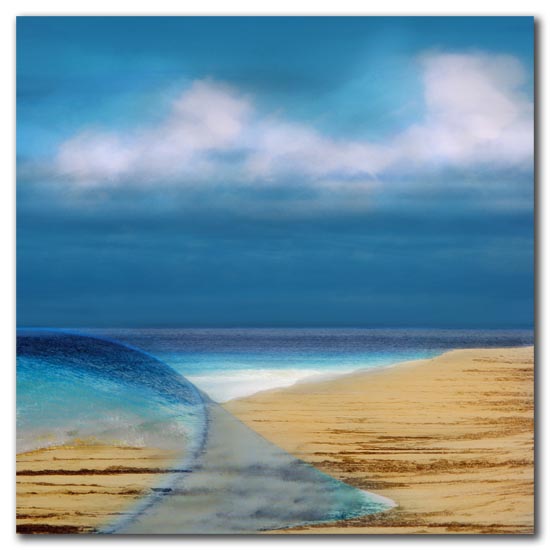
Sandy Point Peel - 2009
The leatherbacks come ashore well after dark to lay their eggs, and the baby turtles emerge from the sand just after dusk about 60 days later. Whether in the brilliant mid-day light, at dusk or on a moonlit night, the stark shapes and brilliant color fields of Sandy point are stunning.
(Contact the St. Croix Environmental Association for information on guided turtle-watch tours.)
Fort Christiansvaern, Take 2
Posted on February 14, 2009
Here’s a slightly different perspective on our old fort, all planes, shapes and colors. Just the picture for today. That’s all. Time to get back to the shoreline…
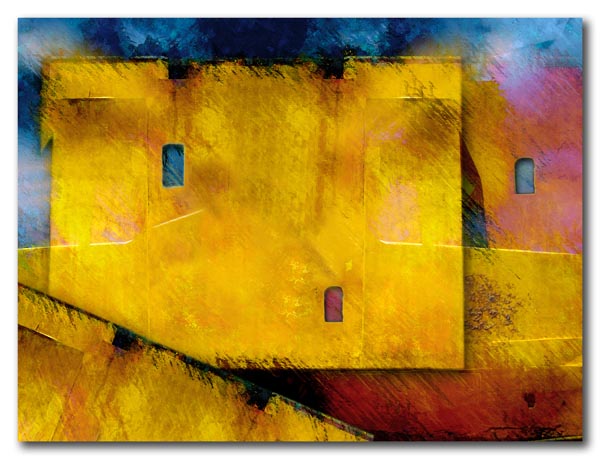
Fort Christiansvaern, take 2
Haiti-haiti flower (Thespesia populnea)
Posted on February 5, 2009
This is the beautiful flower of a common beachside bush (Thespesia populnea) called the haiti-haiti tree here on St. Croix, also known as seaside mahoe, portia tree, and often mistakenly called beach hibiscus. *
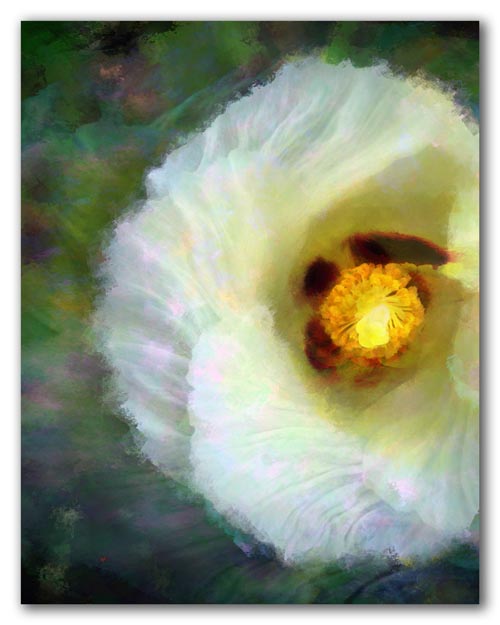
Haiti-haiti flower - 2009
Despite the common name sometimes used, the beach hibiscus is actually a different plant (Hibiscus tiliaceus). Still, the flower does look hibiscus-like. I was attracted by the filmy, creamy translucence of the off-white petals when the flower is fully opened.
While the short-lived flowers are beautiful, the tree itself is scrubby with multiple woody stems. Invasive and salt-tolerant, it can quickly dominate a shoreline. The fruits or seedpods are a favorite of the local bright red love bugs, one of which is featured in my gravatar. More on those guys later!
*Thanks to Carol Cramer-Burke at the St. Croix Environmental Association for pointing me in the right direction on the facts here.
Beach Barstool and Pot of Gold
Posted on February 3, 2009
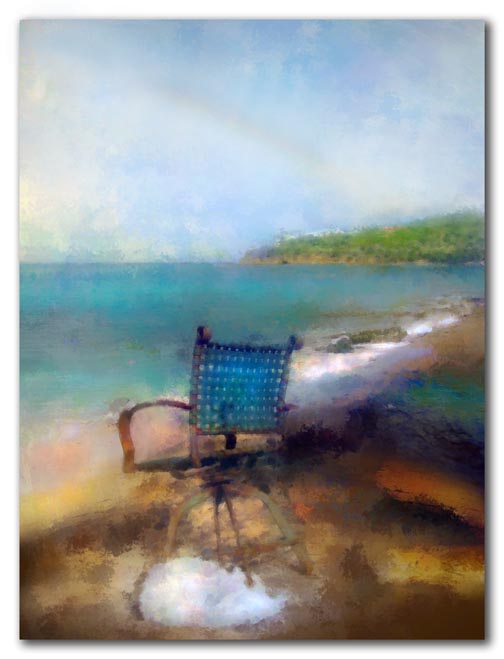
Beach Barstool
This rusty barstool has been down at the beach the last few months. It was joined a few days ago by a white plastic garbage bag.
The salt has eaten away at the chair’s metal frame, almost the same way termites eat away at deadwood, returning it to the soil. This scene of decay told of good times past, evidence of someone passing through this way.
There was a hint of a rainbow in the eastern sky. I wonder now, was that white bag the pot of gold?
Buck Island View
Posted on January 18, 2009
One of the visually stunning aspects of living on St. Croix is the nearly constant view of the ocean and the shoreline. The colors and textures of the transition from land to water inspired this image.
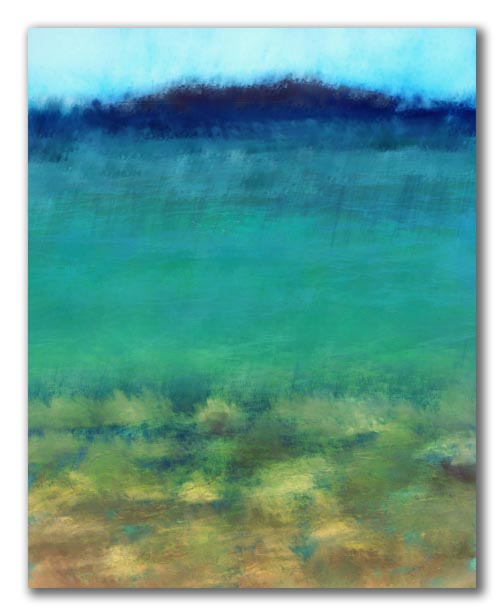
Buck Island View - 2008
This was sold at a benefit show for Haiti Community Support, a local non-profit dedicated to helping a small Haitian community. It has also led to the beginning of a “shoreline” series.
It would be easy, working with the color fields of ocean and beach, to venture off into purely decorative abstraction. I like to think “Buck Island View” is enhanced by the natural elements in it that help ground the image and evoke some of the wonder that the sea is due.
I enjoy producing images that are a pleasure to look at. But it is also important to me for a piece to have some meaning beyond pure decoration. Balancing these elements is one of the things that makes the artistic endeavor endlessly challenging and exciting.
The Irresistible Egg Fruit
Posted on January 13, 2009
There was this pile of bright yellow-orange egg fruit on a red table at St. Croix’s St. George Village Botanical Garden last summer. The jumble of shapes lit with an intense swath of sunlight across the front was irresistible. So I took it home with me.
Occasionally I will go to work immediately on a photograph to produce a final image. However, just as common is the months-long gestation that this one required. Several times I worked on it, was dissatisfied and put it away — only to bring it out later, delete a layer or two (a little like scraping the paint off?) and move forward. That start and stop process sometimes produces an image that is over-worked. But in other cases, it is the only way.

Egg fruit - 2009
The painting-a-day discipline of carrying a painting forward to completion each day is different from the luxury of allowing an idea to gestate, going back days later, and reconsidering the strokes of the brush (or in my case, the stylus). Not better or worse, but different. So does that different process lead to different results?
St. Croix — Hotel Caravelle Artwork
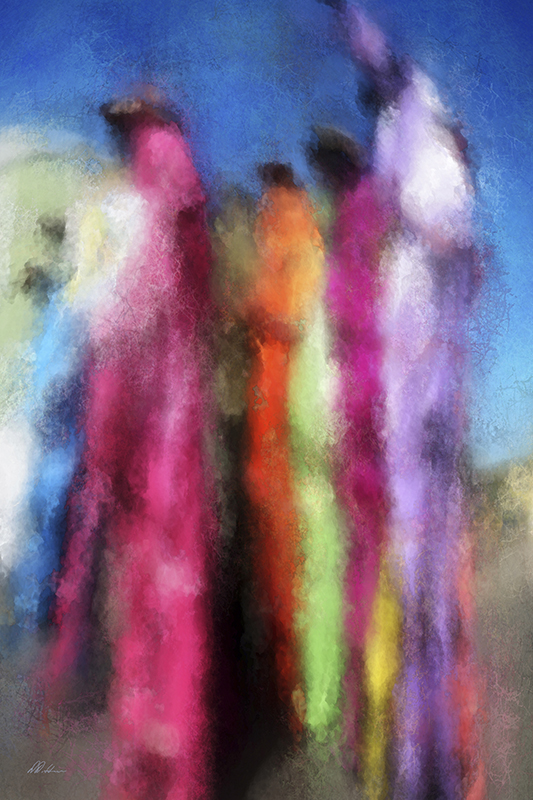
Mocko Jumbies
 Donald Diddams