Donald Diddams
The Art of Digital Art
Donations
Posted on July 29, 2010
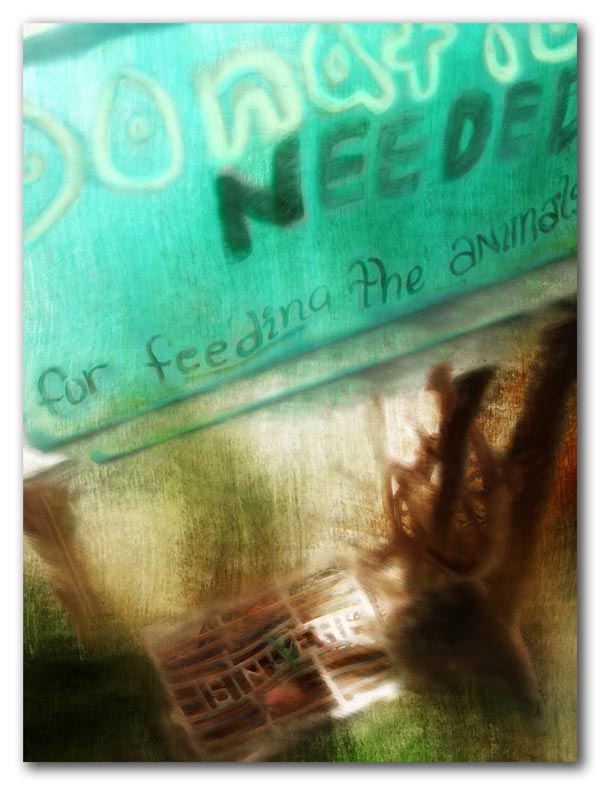
Donations Needed to Feed the Animals - 2010
This donation box “for feeding the animals” is at a mini-zoo in the rainforest, part of the entertainment at a little stand that sells fabulous tropical fruit smoothies. The brightly hand-painted box sits on the metal base from an old Singer treadle sewing machine — somehow not out of place at all in this rustic location.
In another form of donation, the local Senate has just passed legislation appropriating up to $7 million for the government to negotiate the purchase of 12.4 acres of land deep in the rainforest. Now that’s almost $565,000 per acre. For comparison, a 31 acre plot in the same area is listed on MLS for $465,000. Yes, 31 acres for less than the price of one.
The land in question had been leased by the government for use as a rock quarry in 1929. That use ended in 1940, and the land was rezoned agricultural in the 1950’s, disallowing future use as a quarry. In defense of their recent action, our Senators have variously alluded to the land’s environmental and public value as parkland, to the value of the rocks still there, and to the injustice done to the owners (presumably by the rezoning over 50 years ago).
It would be nice if all families who suffered injustice over the past half century could be so compensated. I wish I understood the history and logic that allow this to move forward without public objection. It’s not as though there are no other important uses for the money.
The picture below of a Fed-Ex truck hustling along Church Street in Christiansted town illustrates the contrasts and contradictions that result from the mix of modern enterprise, with the sometimes unfamiliar island priorities and view of the world. It can be difficult at times to distinguish the things that add charm from those that cause frustration.
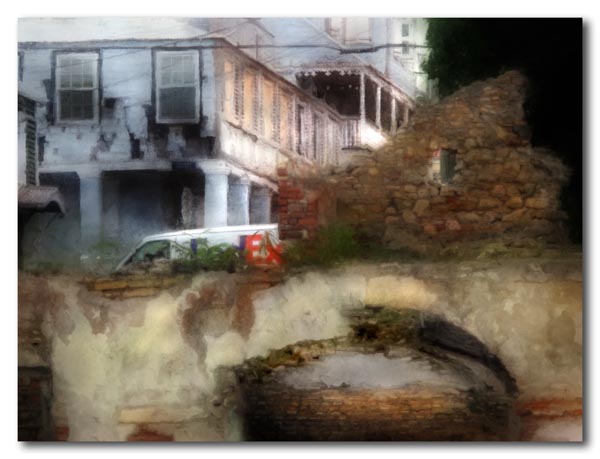
Fed-Ex on Church Street - 2010
Scent of St. Croix?
Posted on July 21, 2010
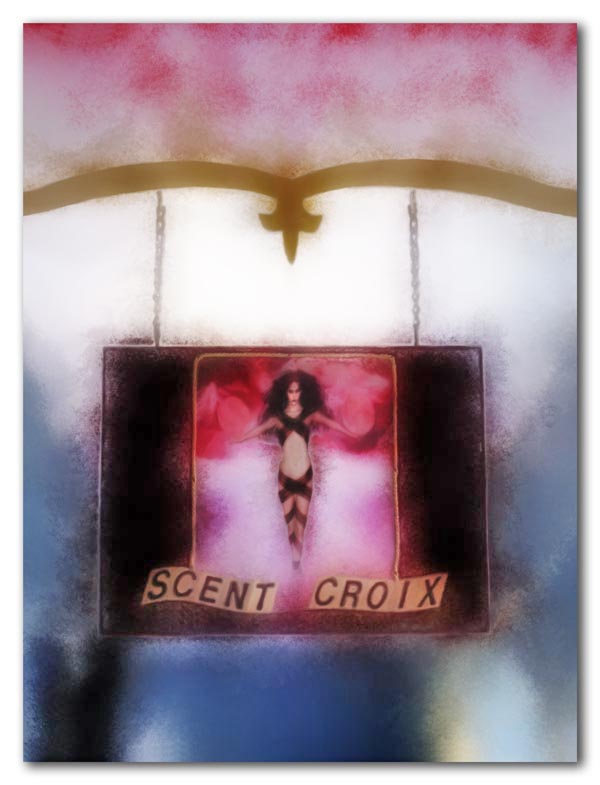
Lotions, Potions and More - 2010
A play on words and the image of a dark haired seductress graces this sign hanging beneath a covered arcade in Christiansted town. The store advertises that it sells costumes and “accessories” such as lotions, bath products, “kama sutra” and more.
A few blocks away, another female gazes forlornly from behind the bars of an abandoned storefront. Someone has placed her there among the detritus of the vacant store, but close to the window and discreetly covered in brightly colored cloth.
While geographically isolated, St. Croix is still flooded with the homogeneous commercialized images of “woman” sold by corporations. But there also seems to be room for creativity and personalized imagery. I hope this kind of personalized imagery is thriving on the streets everywhere.
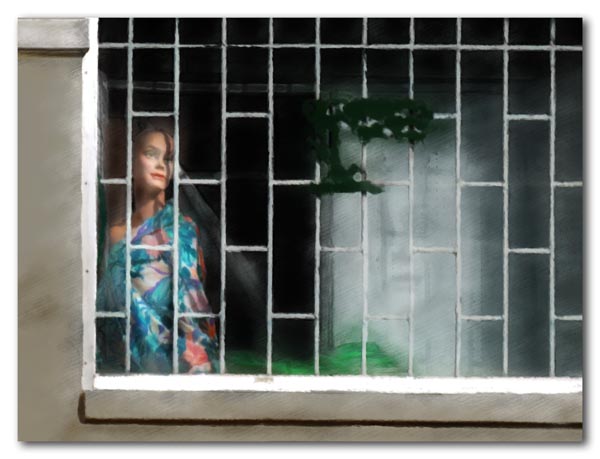
Left Behind - 2010
Iowa Reflections
Posted on July 13, 2010
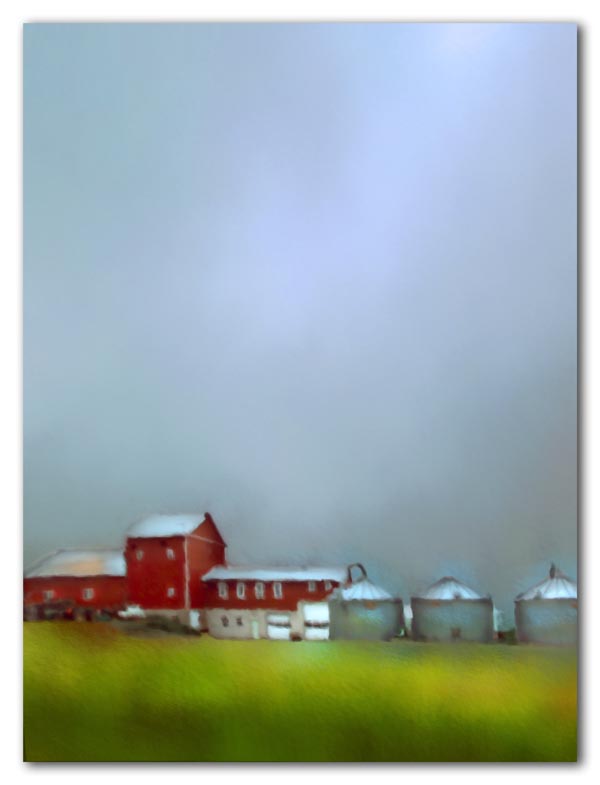
Red Barn
These are two images from a short visit to northeast Iowa and nearby Minnesota in June 2010. To the east of this area, the gently rolling plain gives way to steeper more wooded hills and valleys leading down to the Mississippi River. To the west, the woodlots become scarcer as the land rises imperceptibly to a higher and flatter plain ideal for wind farms layered over the corn and soybean fields. It is a place of contradictions.
The land is open, weeds grow along the gravel roads, and many places are more than an hour’s drive from any town of 10,000 or more. Yet the landscape is being industrialized. Wind turbines, power lines and communication towers sprout like weeds; large scale hog operations miles away reveal themselves when the wind blows from their direction; and except for the Amish, modern chemical-intensive no-till farming has largely replaced more traditional methods. Some townspeople believe cancer rates are rising, and they suspect the presence of farm chemicals in their drinking water.
Many of the original settlers in the area were Norwegian, and that remains a dominant cultural feature today. There is an emphasis on utility more than design, lending an unpretentious plain-ness to the environment, culture and social life, and perhaps camouflaging the changes underway.
For example, until recently, diversity meant the comfortable divisions between Lutheran and Catholic, Norwegian and those of other European heritage, or even between individual families. Although a stranger, I looked like I belonged, and was always greeted with a smile and a wave. However, in recent years there has been an influx of Hispanic laborers who have taken jobs in meatpacking and the few other factories. An undercurrent of the modern anti-immigrant fear of the “other” spreads invisibly like the poison from the fields into the groundwater. Natural beauty, the past and the future collide.
Slideshow with more images from this series.
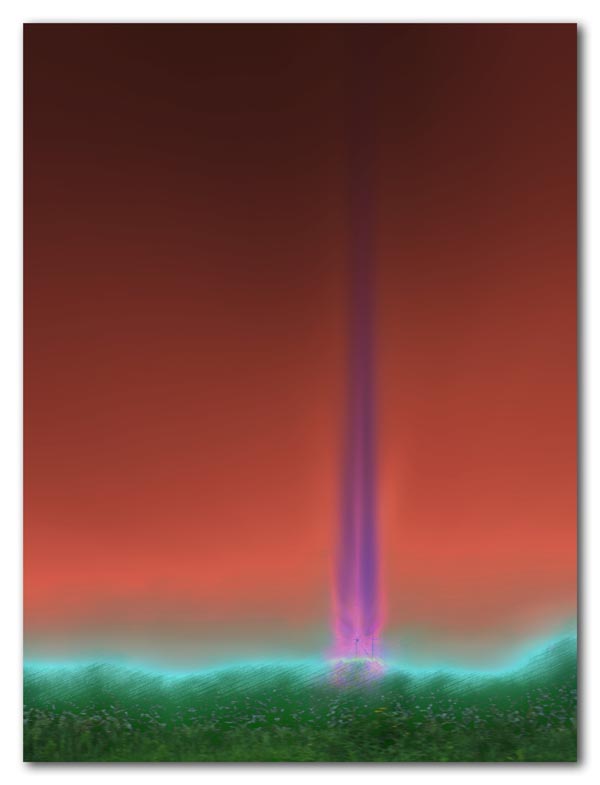
Cornfield Communications - 2010
Shoreline moods
Posted on July 6, 2010

The Calm - 2009
“The Calm” looks west in the protected lee of a point during the calm following a squall. The sun had just broken through, illuminating a single cloud and the shallow water at my feet.
“Ocean Energy” looks east into a brisk prevailing wind on a sunny afternoon, with only the rocky outcrop to protect the shallow pool from the brunt of the ocean waves.
Even when the shoreline palette is so similar as in these two images, the ocean’s moods can be very different.

Ocean Energy - 2010
St. Croix — Hotel Caravelle Artwork
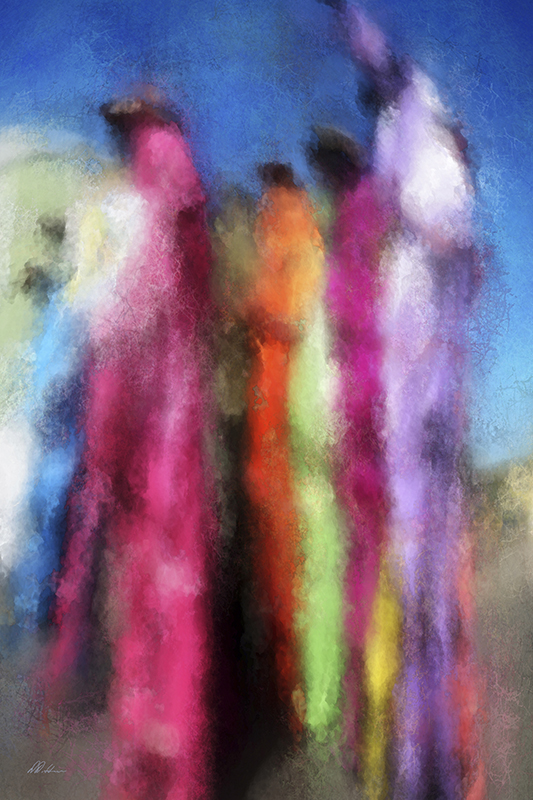
Mocko Jumbies
 Donald Diddams